
Biggie of counterfeit products in the market: PM’s economic adviser also involved
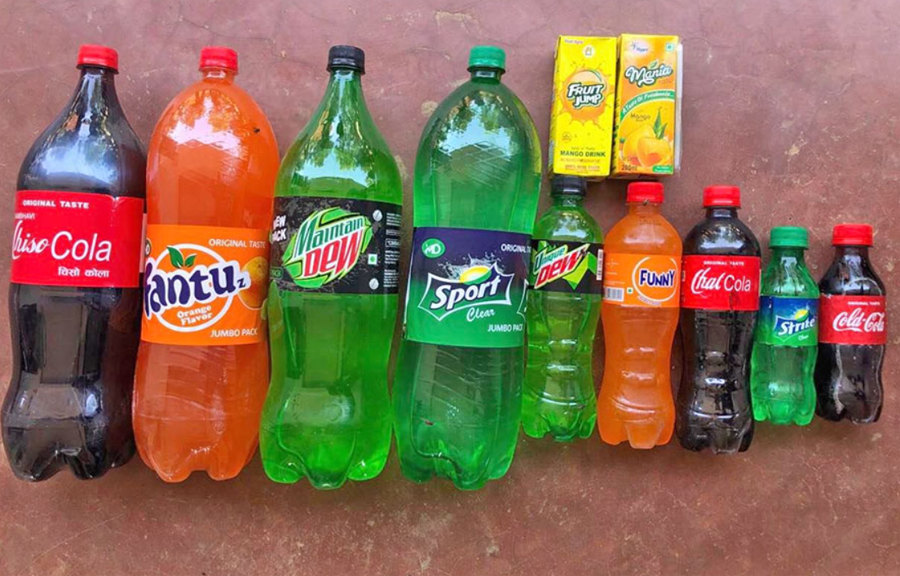
Kathmandu. Gokarna Prasad Upadhyaya, Assistant Chief District Officer of Dhading, posted a photo on social media saying, ‘These brands are seen in the same shop today. I’m surprised! What do you say? ‘Writing a caption on a photo of soft drinks piled on the floor, Upadhyay mentioned that the items were found in the market of Dhading Salyantar.
At a glance, Upadhyay’s photo shows Coke, Fenta, Mountain Dew, Frutti, Mirinda. Explaining the Facebook post of 17 June, Assistant Prajia Upadhyaya wrote another status on Facebook on 18 June.
“I found a drink I had never seen before in Salyantar,” he wrote. Not only the names of the brands of the multinational companies, but also the beverages produced by mistake in color, design and label, I was amazed to see them in the villages.’
According to Upadhyaya, ‘Fantu’ and ‘Fanny’ were found in Salyantar while buying a drink called ‘Fenta’. Drinks called ‘Sport’ and ‘Strike’ were found while buying ‘Sprite’. Mentendu was found in a bottle of Mountain Dew. Chatcola was found in a bottle like Coca-Cola.
‘At first glance, I was amazed at the color, the bottle, the design, the indestructible, the label. It is a product of Dhangadhi. Where is Dhangadhi, where is Salyantar of Dhading. How did this product get here? ‘Assistant Prajia Upadhyay wrote on Facebook.
Writing a status with a photo on Facebook on June 10, 2078, consumer rights activist Premlal Maharjan questioned the authenticity of Kurkure Masala Manch and Kurmure and Vikaji Vikaneri Bhujia and Century Vikaneri Bhujia.
Maharjan lamented that the regulator has not done anything to control the distortion of genuine and counterfeit products in products that look directly from the outside and are directly related to public health.
These two examples indicate that counterfeit goods with the same name, bottle and cover design and color are being exploited by weak industrial laws.
Since the state and the law do not identify which goods are being consumed daily by the people as genuine and which are counterfeit, it has become impossible to distinguish between fake and genuine in the goods and services we consume and use.
Government officials and human rights activists who monitor the market say that there are not many counterfeit items in Nepal. They say that even important papers from wearing and eating are found to be counterfeit. This clarifies the state of our market and the risks facing consumers.
Counterfeit liquor
In May 2072 BS, six people of Musahar Tol of Siraha died due to alcohol poisoning. He was found dead in the morning after drinking alcohol in the evening. He died within 10 hours after experiencing severe headaches, dizziness, vomiting and loss of eyes after drinking alcohol.
According to the records of the District Administration Office, about 30 villagers fell ill due to alcohol at the same time. In 2069 BS, eight people were killed in the same village after drinking alcohol and sleeping.
An examination of the deceased at the BP Koirala Institute of Health Sciences confirmed that toxic alcohol was the main cause. The number of deaths due to toxic alcohol produced illegally in the Terai, hills and Himalayan districts is not limited to this.
According to the old records of the Consumer Interest Protection Forum, a person named Madhav Ghimire died in Kathmandu in 2058 BS due to consumption of fake liquor. Chairman of the forum Jyoti Bania says that the then UML leader Thakkar Prasad Sharma also lost his sight in the incident. In the case, the forum had filed a compensation case against a store selling liquor called ‘Royal Stag’.
Although there is no data on how many counterfeit liquors are produced without being registered in the market, complaints of counterfeit liquor of popular brands are found in government bodies. The complaint of counterfeit production of international brands of liquor is in the Intellectual Property Branch of the Department of Industry. According to the department, the levels of ‘Royal Stag’, ‘Golden Walk Whiskey’ and ‘Blue Ribbon’ were stolen and produced in Nepal.
Deepak Ghimire, deputy secretary at the department, said that these companies have been found to be producing and selling liquor in Nepal with names and labels similar to their products. ‘The same name, the same color and the same design of the bottle have also been found in the complaints department found in the market, we are investigating,’ he said.
Fake soft drinks
Counterfeit soft drinks produced by companies in Kailali, Rupandehi and Jhapa are available all over Nepal. According to the Commerce Department, counterfeit products similar to Coca-Cola, Fenta, Sprite, Pepsi, Slice, Mirinda, Mountaineu, Real Juice are available in villages and markets.
Products like ‘Fantu’, ‘Fanny’, ‘Sport’, ‘Strike’, ‘Maintendu’, ‘Chatkola’ and ‘Kolakola’ have been found in the market. According to Sagar Mishra, who has worked as the market monitoring director of the Commerce Department, such products are found in the border areas of the Terai and remote hilly districts.
“There is not much study on the quality of such products, which are indistinguishable from color, bottle, design, and can only be known by looking at the label,” he said. This shows that government bodies are not sensitive to the health condition of consumers.
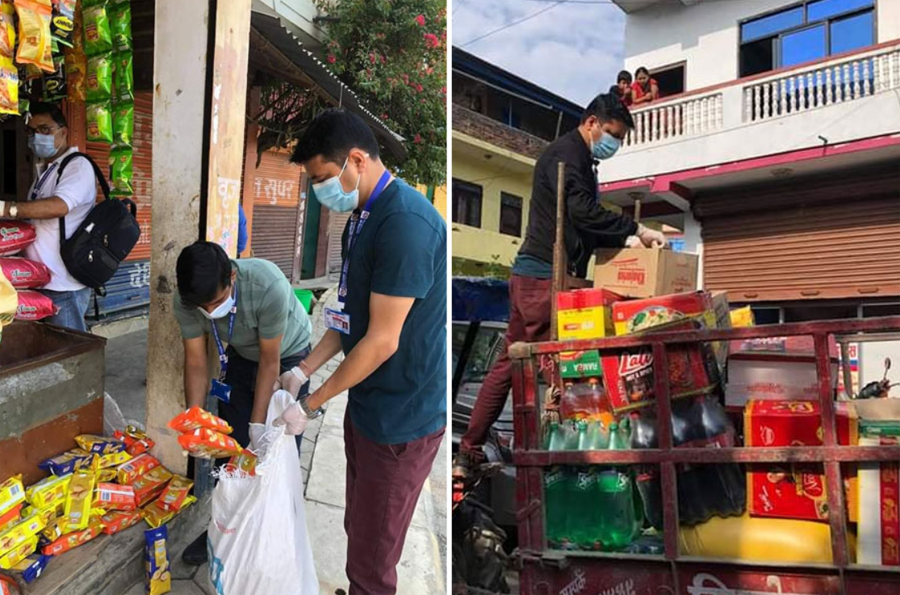
For example, a Commerce Department official used to buy ‘Good Day’ and ‘Top’ biscuits for a child at home. One day he asked for a biscuit named after him from a shop near his house. The shopkeeper put it in his bag and took it away. But when he reached home and opened it, the shopkeeper gave him ‘Goodlight’ biscuits with the same shell, the same color and the same design.
He said a British company in the West Terai had produced a British company in the same design and color as Good Day Biscuits. Similarly, agarbatti made by imitating agarbatti produced by a company based in Madras, India, is found in Nepal, say the officials of the department.
Undersecretary Sagar Mishra, who has been working as the head of the monitoring branch in the department for a year, says that counterfeit gutkha, Haldiram’s bhujia, pickle, dalmoth and betel spice and rajnigandh are also found in the market. He said that the situation in the Nepal-India border area was even more dire.
He said that the rice brought from India in an open truck was packed in bags of the same brand and sold after entering Nepal.